


Crusader | Short Film Case Study
Updated: 1 day ago
Throwback to one of HyperJump's earliest projects as a team, the desert epic short film, Crusader!
Crusader was one of the first projects HyperJump Productions ever created. In the initial stages of forming HyperJump Productions, there were five members: Hector, Saif, Harry, Robbie, and Dennis. What brought them together was this specific project and film.
The lead actor, Robbie, was a writer and an up-and-coming actor. His incredible script intrigued Saif, Dennis, and Hector to be a part of the project and scope. The historical setting of the project inspired Harry Bryant to project manage, choreograph the fight scenes, as well as helping the overall production.
The concept behind Crusader was very much inspired by Ridley Scott's Kingdom of Heaven, which had religious, historical and philosophical topics that were explored, but never really resolved, sort of push pushing viewers to ask important intrinsic questions. That questioning itself was the foundation around Crusader.
At the time, Dennis was on the crew of a historical TV show called Valhalla that Netflix was running, and a colleague of his, Karen Galindez, was working in the costume department. Partly due to COVID, they both happened to be in Dubai at the same time, when this script hit Dennis' table.

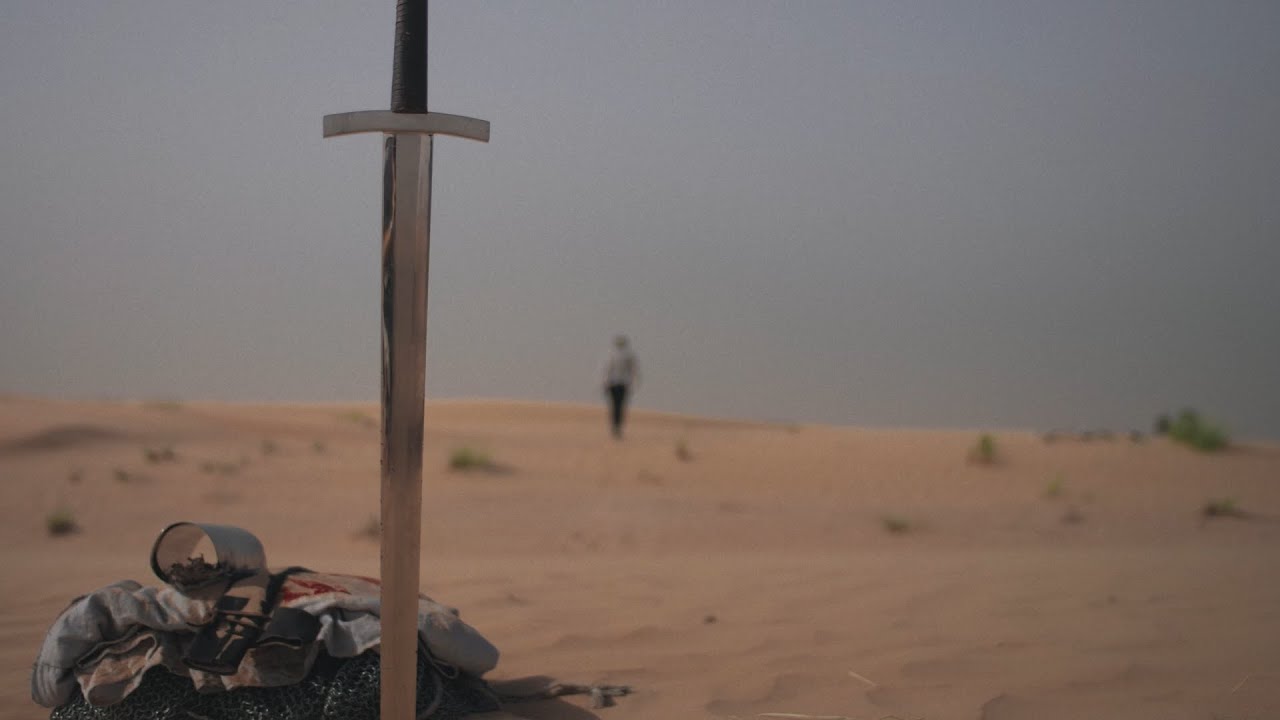
He was inspired to call her up and, because of her experience within historical dramas, she was able to create this incredible heavy-duty chainmail that Robbie Myers wore, and the Saracen armor that Moussa Taha wore for the film.
The film was shot in the United Arab Emirates, from locations in Meliha, Sharjah, Khor Fakkan, Ras al Khaimah and also Showkah, so the aesthetic blends mountains and deserts together, and allows the viewers to go on this journey from the desolate deserts to the sort of philosophical mountains.
After Robbie's character kills Moussa's character, we sort of venture on this journey upwards through the mountains to explore Robbie‘s faith as a Christian, and as a crusader. The type of video we were approaching, we wanted it to look like a short film that could eventually become a feature, and at the time we actually wrote a full feature-length script for this short film in hopes that after it gained a lot of publicity, we could entice investors and other people to help us create a full feature length film.
The length of the film was around 18 minutes. We had wanted it shorter, but there was incredible acting moments that both Robbie and Moussa gave, so we ended up holding on shots longer and really allowing those acting beats to carry on screen. There wasn’t a deadline and, in fact, it took over a year and a half in post production to actually finalize this film.

We actually hired a re-recording and mixing company in LA to mix all of the sound together and make it feel a bit more real, with a lot more fullness and depth in the voices, rather than making it feel like microphones. The LA company actually made it feel like they were speaking in those environments, and we even have to dub specific scenes, but if you watch the film, it just plays off flawlessly.
On top of that, we hired a composer called Alex Billione, and he hired all of the Ottoman and Saracen instruments that were culturally relevant to that historical time and made music using those specific instruments. It really breathed life, as the tone of the film followed that sort of age even through the musical soundtracks. It was also extremely important, having someone like him on board, as it allowed us to shoot however we wanted to shoot, use temp music, and then he'd tailor-make instrumental music from scratch for what works best for that specific scene.
HyperJump was involved in this project because, out of necessity to do this project, we created a company so that we could bring all of the equipment and creative team together. Everyone on board was looking to show off the absolute best that we could do creatively.
Within the seven day timeframe of shooting all of these scenes, we managed to create something that we were truly proud of to represent our sense of filmmaking skill at that time, as well as a beautiful piece of art.
The key challenges we had in pre-production was finding the location, however, due to Moussa Taha being very familiar within the United Arab Emirates, he managed to show us some incredible locations which really breathed life production-wise.
The production challenges stemmed from us not technically being a professional crew yet at the time, and using semi-professional equipment. For example, even though we used a Red Epic Dragon for the camera, we used a Chinese badly-built cinema lens that was made for Photography, which is only a few hundred dollars to actually buy.
Because we didn’t have any budget, we weren’t able to rent any video transmitters, so the focus puller was directly connected via HDMI cable to the cinema camera and would run around with me, the camera operator, as I was doing handheld fight scene scenes. This was extremely difficult, so we actually stopped down to 5.6 as a lot of of the shots were out of focus, but overall it did look relatively good, as we did shoot a lot of content and cut out any shots that fell out of focus.
On the flipside, some days we didn’t even have a focus puller, so Dennis would have to bring his own dad, who had no prior focus pulling experience and he just tried his best to make sure that all the footage was as sharp as possible.

There was so many extensive post production challenges. Mistakenly, Dennis‘ mom, the day before the shoot, washed the clothes for the Crusader that we had purposely made dirty, and all the Crusaders clothes were pristine clean and had removed all of the coffee stains. We didn’t have enough time to make it dirty, so in post, we actually added dirt details in order to make the costume look a bit more rundown and worn out.
Additionally, a lot of the magic also happened in post. Rashid Hafez did the famous night scene, which was inspired by the scene of the TV show Hurricane, when the protagonist loses her mind and it cuts between back-and-forth of her speaking to herself. We wanted a very similar approach, even though we didn’t shoot for that style, Rashid Hafez was able to make it almost feel intentional, and the final product actually turned out better than we anticipated.
Overall, the project was a huge success. Crusader ended up winning the most awards HyperJump has ever won for a project till today, with over 10 awards from festivals all over the world, from Los Angeles Film Awards, Los Angeles Cinematography Awards, Swedish Film awards, etc.
Crusader seem to have put a serious dent within the market as well, as it opened the door for HyperJump to get large campaigns such as Careem, Property Finder, Insta Shop, Brands For Less, and many other big commercial deals due to it impact within the region.
The key lesson that we learned from this project was the free creative projects you pour your heart into are often way more important than commercial, paid work, as these will probably get you closer to doing what you most enjoy, but also what you’re most talented and gifted at overall. It was an incredible experience working on this film many years ago, and we hope to eventually evolve all of these up-and-coming projects to be more curated in storytelling and eventually be pumping out feature films!
Have a project you’d like to talk to us about? Contact us now at info@hyperjumpproductions.com or at (+971) 058–599-8064.



Comments